
Suede vs Leather at The Row: Why One Version Is Dearer
Fifteen hundred and twenty dollars. Between the India 10.00 in leather at $3,850 and the same bag in suede at $5,370, that is the observed 2026 spread — identical silhouette, identical dimensions, identical hardware, one material change. The pattern holds across the line, which signals it is a cost decision and not a momentary quirk. For anyone comparing the row bags at the upper end, this is the largest variable that owes nothing to size, and the one least often explained. Answered candidly, it is a question of hide yield, finishing labour, durability and how each material ages once it reaches the secondary market. Below, calfskin and suede are measured against each other on all four counts, on observed market prices rather than an official list, since the brand publishes none.
Quantifying the Premium
Start with the evidence, because the suede surcharge is consistent enough to measure. On the observed 2026 line-up, three pairings give the same silhouette in both materials, and the dollar spread holds firm across the India family. The Agnes 15 does not follow suit, with a tighter gap in both dollar and percentage terms, so the premium is hardly a fixed rule. The same model comes in a canvas blend at $4,300 as well, seven hundred dollars below the leather version of itself, and that caps the ladder from canvas up through calfskin to suede. Because the number in each model name is no more than the bag’s width in inches, these truly are like-for-like comparisons and not size steps in disguise. Stock and stockist both shift prices, so the table is best read as one moment in the market rather than a permanent price.
| Model name | Leather, as recorded in 2026 | In suede, observed 2026 | Premium |
|---|---|---|---|
| India 10.00 | $3,850 | $5,370 | +$1,520, around 39% |
| India 12.00 | $3,890 | $5,450 | +$1,560, about 40% |
| Agnes 15 | $5,000 | $5,800 | +$800, about 16% |
Calfskin and the Job It Does
The structural spine of the catalogue is calfskin, which is entirely why so many of these bags hold themselves up when empty. It takes a https://saint-bags.com/shoulder-bags/ defined shape and holds it, which matters for a house that recognises its products by outline rather than a stamped name. A range of finishes is achievable on it as well, so one hide type spans very different objects. Stated as one hundred percent calfskin in a matte grained finish and lined in cotton herringbone, the Soft Margaux 10 sits alongside the Margaux Shoulder 12, which pairs calfskin with a full lambskin lining. Real calfskin at this level feels substantial and soft at the same time and absorbs light rather than bouncing it back, which is a reliable way to read a row bag in person. In practical terms it forgives more than suede does: buffing, light conditioning and, within limits, professional repair are all on the table.
Which Calfskin Finishes You Will Run Into
Calfskin in the line does not all behave the same way, and the finish changes both the look and the maintenance burden. The variations recur across families rather than belonging to one model, so learning them once repays the effort. The most formal of them is smooth calfskin, which also records marks most readily. Matte grained calfskin, used on the Soft Margaux family, disguises wear better and is the workhorse of the collection. Saddle calfskin is heavier and more structured, giving the compact top-handle shapes their backbone. Polished calfskin is the dressiest of them, and its surface catches light in a way the matte finishes are designed to avoid. Below is a short guide of what each finish asks of whoever owns it.
- Smooth calfskin — the most refined surface, and the least tolerant of scuffs and rings
- Matte grained calfskin — safest everyday compromise, hides light wear well
- Saddle calfskin — structural and firm, holds shape hardest
- Polished calfskin — the dressiest surface, and the first to show handling marks
- Lambskin and nappa — mostly used as lining, exceptionally soft and easily marked
Suede, and What It Does
Suede is a different proposition entirely, chosen for feel and depth of colour rather than for durability. It gives the same silhouette a softer edge and a matte density that calfskin cannot reproduce, which is why it turns up on relaxed and structured shapes alike. Here, genuine suede is uniform in colour across the panel and free of plastic sheen; that evenness is one of the material’s tells when a bag is being judged in person. Within the Margaux family it appears next to grained calfskin, saddle calfskin, canvas and nylon, and it drives several pieces beyond the current catalogue as well. A suede Backpack 9 has been observed at $3,900 through a retailer, while the archive Bindle was a suede bag with raw-cut trims and a knotted detail, reported at roughly $1,190 originally. The Bindle Three is suede as well, observed around $1,700 on the secondary market, carrying a single padded handle and a removable inner zipped pouch.
Why the Premium Exists
Four factors explain the surcharge, and branding is not one of them. The inner surface of the hide is where suede is produced, so usable area per skin drops and rejection rates rise for panels large enough to cut a bag from. Even colour across every panel is required, and suede betrays inconsistency far more brutally than a grained surface, so matching costs money. Nap direction has to run correctly across seams, introducing cutting constraints a smooth leather pattern never meets. And suede is harder to correct in production, as any mark that calfskin would yield to a buff is permanent on it. The Agnes 15 gap of $800 against the India family’s $1,520 to $1,560 suggests the premium follows how much material a given pattern consumes rather than a flat brand-wide uplift.
Owning Each Material
The brand issues no care protocol for these bags, which makes the following material-appropriate general guidance and not an official instruction set. The shared rules are simple and apply to every row bag regardless of material: do not overfill, keep the bag away from direct sunlight, heat and rain, and store it in its dust bag lightly stuffed so it holds shape. After that the two diverge sharply, and nothing ruins an expensive purchase faster than treating suede like calfskin. A soft dry cloth is what calfskin wants, with a neutral conditioner used sparingly on occasion. Suede responds to almost nothing but a suede brush, and stains usually need professional attention. Below is the ordered sequence worth following the moment either material picks up a mark.
- Stop, and establish which material you are dealing with before touching the mark with anything
- On calfskin, buff gently with a soft dry cloth first and reassess
- Apply neutral conditioner to calfskin sparingly and infrequently, never as a routine
- On suede, use a suede brush only, working with the nap
- Keep leather cream, wet wipes, soap and water-based cleaner well clear of suede entirely
- Take any genuine suede stain to a professional rather than experimenting
How Resale Values the Difference
Resale does not hand the suede premium back evenly, which is worth understanding before you pay it. In the Rebag CLAIR 2025 report The Row posted 97% brand-level value retention and entered the top tier for the first time, behind only Telfar, Hermes and Goyard. The strongest individual numbers belong to structured leather pieces — the N/S Park Tote at 146%, the Margaux Tote at 107% and the Half Moon shoulder at 106%. The appreciation belongs to black and neutral calfskin in the signature silhouettes, not to the catalogue at large, and canvas, nylon, sisal and seasonal-colour pieces are observed discounting. None of this is investment advice, and none of it implies suede is a mistake. What it means is that the suede premium should be paid for the object itself, since the resale market is unlikely to return it.
Which One to Buy
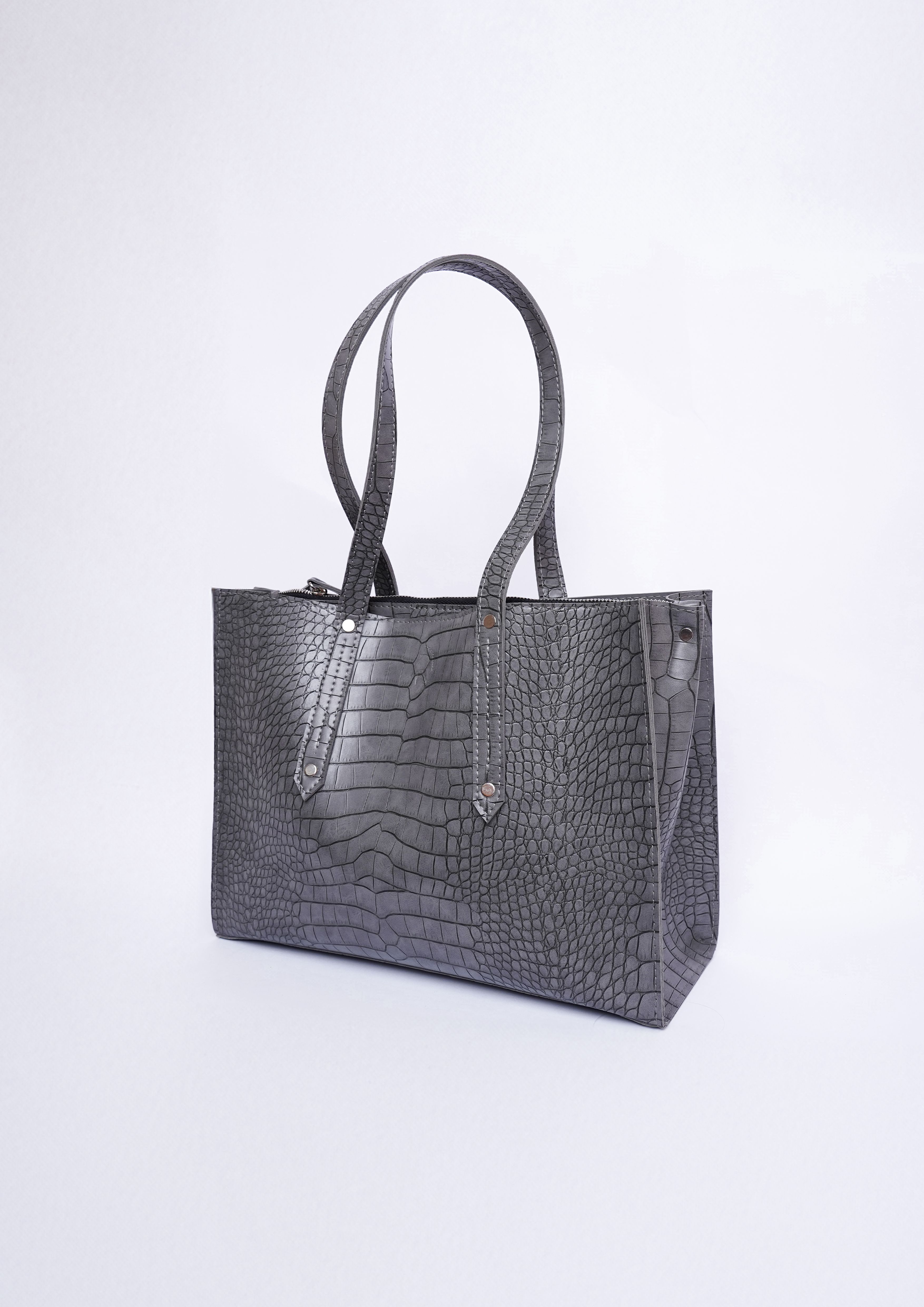
Stop framing it as better versus worse and the decision becomes much simpler. Reach for calfskin if constant wear, unpredictable weather, or a defined shape held for a decade is what you are asking of it. Choose suede if the structured piece is already yours and you want the same silhouette with a different hand, or if depth of colour is the whole reason you want it. Anyone building a first serious collection of row handbags is generally better served putting the money into a structured leather signature shape and adding suede later. If both versions of a model are in front of you and you cannot decide, the tie-breaker is your climate and your storage rather than your taste. That is easily the least glamorous conclusion in the row fashion conversation, and the one owners reach by themselves after a single rainy afternoon.
